Appearance: The Difference You See First
The most immediate distinction is visual.
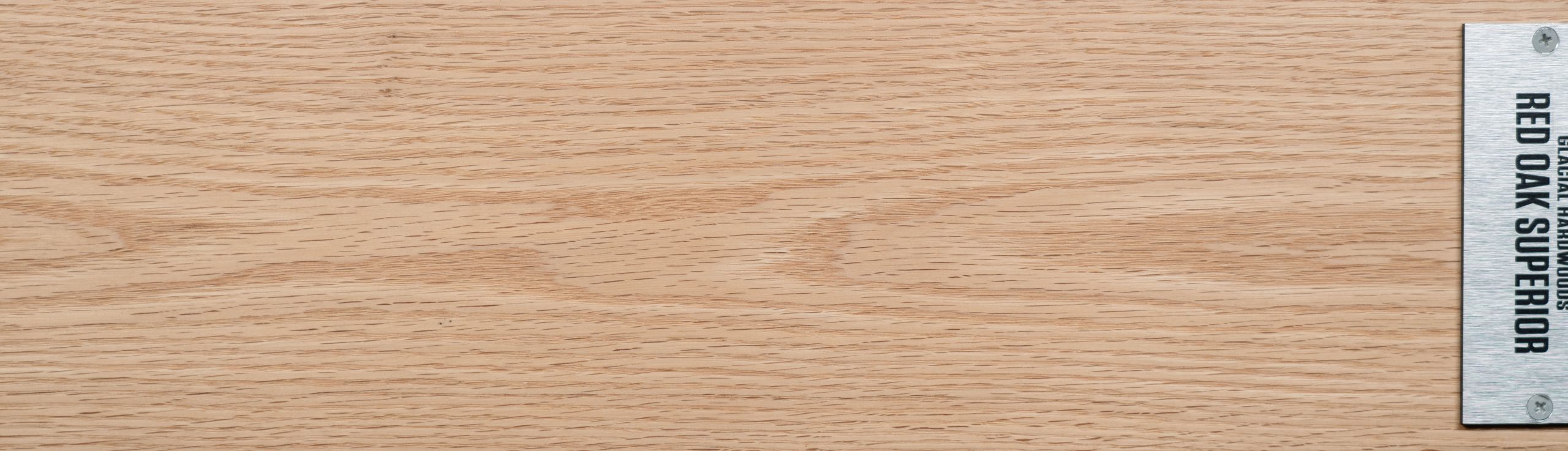
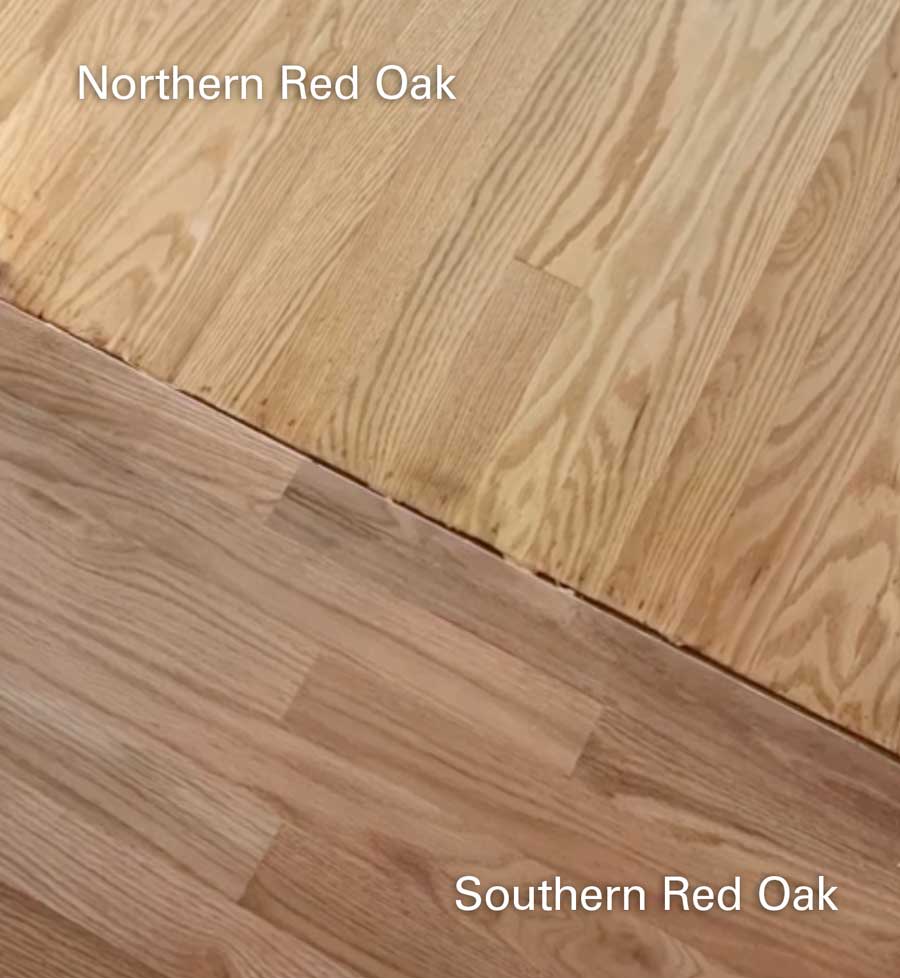
Northern Red Oak, sourced from Appalachian and Northern regions, typically presents warmer tan and wheat tones with subtle light pink undertones. The grain tends to be straighter and tighter, creating a refined and consistent appearance from board to board.
Southern Red Oak, grown in longer Southern growing seasons, often carries more pink and red tones with a more pronounced, wide grain pattern. Natural variation is more noticeable across a unit, resulting in more color variations, less uniform grain and overall visual character. Multiple sub-species adds to the variable appearance that you don’t see in Northern production.
In practical terms, the contrast appears in three ways:
- Color consistency across boards
- Grain tightness and straightness
- Overall visual refinement in finished applications
For today’s cabinetry, furniture, and architectural interiors, those differences can matter.
Performance: Where Growth Conditions Matters in Production
Regional growth doesn’t just affect appearance. It affects how the material works in the shop.
Northern growth conditions contribute to tighter growth rings and generally higher, more consistent density. That consistency translates into dependable machining performance and reliable wear resistance and stability.
Northern Red Oak is widely regarded for:
- Clean, predictable planing
- Strong boring and shaping characteristics
- Reliable performance in precision manufacturing environments
Southern Red Oak remains structurally sound and machines well overall. However, variability in density and hardness can be slightly more pronounced, which may require closer attention in high-volume or automated processing.
When production efficiency and yield are critical, consistency becomes more than a preference, it becomes a specification decision.

| Northern Red Oak | Southern Red Oak | |
|---|---|---|
|
Color Tone |
Warm tan, wheat, subtle pink |
Stronger pink and red tones |
|
Grain Character |
Straighter, tighter, refined |
More pronounced, open grain |
|
Consistency |
Uniform board to board |
Greater natural variation |
|
Performance |
Higher, more consistent density |
Slightly more variable hardness |
Working Properties and Hardness
Regional growth conditions influence density and machining behavior.
Northern Red Oak is reported to have:
- Higher and more consistent density
- Strong durability and wear resistance
- Superior overall working properties
Southern Red Oak remains structurally sound but typically exhibits:
- Slightly lower average Janka hardness values
- More variability in density, which impacts finishing/staining
- Less consistent working properties by comparison
In precision machining environments, those differences can affect efficiency, surface quality, and long-term performance.


End Grain Comparison, Wood Database

Consistency and Yield
Beyond working characteristics, log size and regional quality also impact yield and application fit.
Northern Red Oak
- Preferred for applications requiring consistent color and grain
- Commonly used in high-end cabinetry, furniture, and veneer
- Due to typically smaller log diameters, Northern Red Oak yields a limited supply of high-grade, thick stock.
Southern Red Oak
- Longer growing season can produce larger trees on average
- Often yields greater average lengths and widths
- Can be advantageous for moulding and general millwork programs
- Exhibits greater natural variation in color and grain
The distinction is not about capability—it’s about predictability, alignment with project requirements, and ultimately the appearance.
Why the Market Values Them Differently
Market pricing reflects what buyers prioritize: appearance, consistency, and working performance.
Northern Red Oak typically commands a premium because it delivers tighter grain, more uniform color, and dependable machining characteristics. Smaller logs and less availability also play into the price.
Southern Red Oak offers a more cost-effective option with broad availability and potential size advantages.
Both materials have their place, but they serve different objectives.
See the Difference
The Bottom Line
Red Oak is not a single, uniform commodity.
Where it grows shapes how it looks, how it performs, and how it contributes to the finished product. Understanding those regional differences allows manufacturers, distributors, and specifiers to make informed decisions based on application and not just species name.
When consistency, refined appearance, and predictable performance matter, regional sourcing makes a visible difference.
And that difference carries value.

Share This Post!