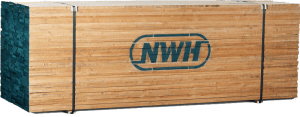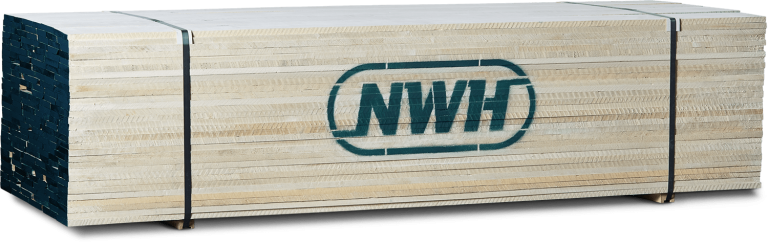


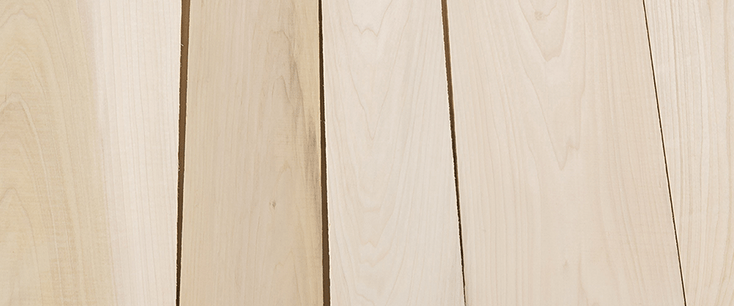
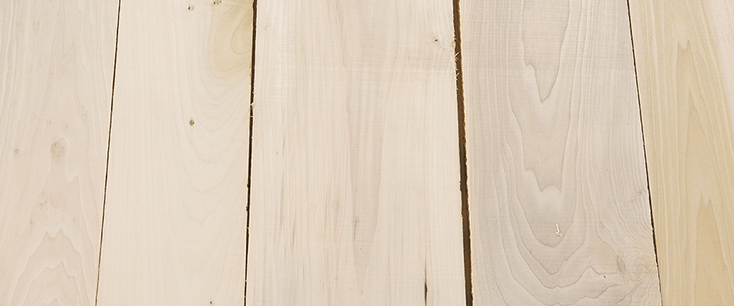
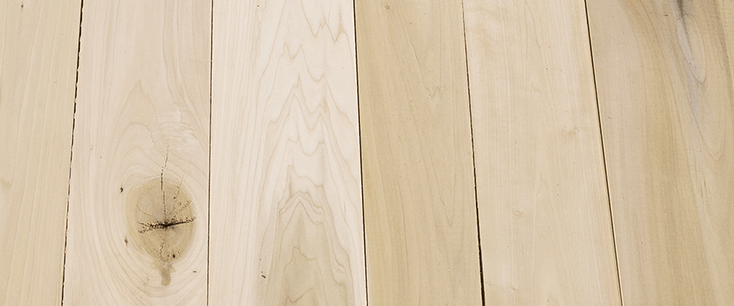

Northern Yellow Poplar grows across the northern regions of the United States, where cooler climates contribute to naturally brighter white tones and more consistent color from board to board. This fast-growing hardwood is valued for its straight grain and uniform texture, making it an excellent choice for both painting and staining applications.
Northern Poplar typically features a clean, light appearance with minimal color variation compared to other poplar sources. While subtle green or gray undertones may still occur, its overall brightness offers a more uniform aesthetic. Like all Poplar, it will darken slightly over time with UV exposure. Though softer than many hardwood species, Northern Poplar remains durable enough for a wide range of uses and is especially easy to machine. It’s commonly selected for carving, detailed millwork, and the production of furniture, doors, and interior architectural components where consistency and workability matter most.
No Pilot Hole
Quick Fact:
Poplar is the Swiss Army knife of hardwoods, often serving as an economical option for everything from construction to furniture.
NWH Glacial is available as PEFC certified, FSC Mix Credit, FSC Controlled Wood or PEFC Controlled Sources.
Grades Available
| Lumber (12 % moisture content) | Machining | Sanding | Finishing | Gluing | Nailing/ Screwing (No Pilot Hole) | Weight per bdft | Specific Gravity (Density) | Hardness (Janka) | Bending Strength (MOR) | Bending Stiffness (million psi) (MOE) | Dimensional Movement (Shrinkage) R (%) | Dimensional Movement (Shrinkage) T (%) |
|---|---|---|---|---|---|---|---|---|---|---|---|---|
| Alder | 10 | 10 | 10 | 9 | 7 | 2.45 | .41 | 590 | 9,800 | 1.380 | 4.4 | 7.3 |
| Ash | 9 | 10 | 9 | 8 | 6 | 3.56 | .61 | 1,320 | 15,000 | 1.740 | 4.9 | 7.8 |
| Basswood | 10 | 10 | 9 | 8 | 8 | 2.50 | .37 | 410 | 8,700 | 1.460 | 6.6 | 9.3 |
| Beech | 8 | 8 | 10 | 8 | 8 | 3.69 | .64 | 1,260 | 14,900 | 1.720 | 5.5 | 11.9 |
| Cherry | 10 | 9 | 10 | 9 | 7 | 3.07 | .52 | 950 | 12,300 | 1.490 | 3.7 | 7.1 |
| Hickory | 3 | 7 | 7 | 3 | 3 | 4.14 | .67 | 1,820 | 13,700 | 1.730 | 4.9 | 8.9 |
| Hard Maple | 9 | 8 | 10 | 9 | 4 | 3.73 | .64 | 1,450 | 15,800 | 1.830 | 4.8 | 9.9 |
| PC Maple | 9 | 9 | 10 | 9 | 5 | 2.74 | .50 | 850 | 10,700 | 1.450 | 3.7 | 7.1 |
| Soft Maple | 8 | 9 | 10 | 9 | 5 | 3.19 | .55 | 950 | 13,400 | 1.640 | 4.0 | 8.2 |
| Red Oak (Northern) | 10 | 10 | 9 | 9 | 7 | 3.64 | .63 | 1,220 | 14,380 | 1.761 | 4.0 | 8.6 |
| Oregon White Oak | 9 | 9 | 9 | 8 | 8 | 4.34 | .72 | 1,640 | 10,200 | 1.090 | 4.2 | 9.0 |
| White Oak (Eastern) | 9 | 10 | 9 | 7 | 7 | 3.94 | .68 | 1,350 | 14,380 | 1.762 | 4.4 | 8.8 |
| Poplar | 9 | 8 | 10 | 9 | 6 | 2.81 | .43 | 540 | 10,100 | 1.580 | 4.6 | 8.2 |
| Walnut | 9 | 8 | 9 | 7 | 7 | 3.36 | .56 | 1,010 | 14,600 | 1.680 | 5.5 | 7.8 |
| Yellow Birch | 10 | 8 | 10 | 8 | 2 | 3.53 | .62 | 1,260 | 16,600 | 2.010 | 7.3 | 9.5 |